How to Make Small Test Batches of Soap (So You Don’t Waste Ingredients)
Updated: Jul 24
Test batches are your best friend as a soap maker, especially when you’re just starting out. Making smaller loaves lets you experiment with new oils, colours and botanicals without sacrificing a whole bottle of olive oil or a big slab of soap. In this post, we’ll go through how to scale down recipes safely and what to watch out for in tiny test batches.

Why Make Small Test Batches in Soap Making?
Testing in small batches allows you to:
Experiment with natural colorants (e.g., indigo, spirulina, turmeric, and clays)
Try out essential oil blends without committing to large amounts
Adjust recipe formulations for better lather, hardness, or conditioning properties
Minimize ingredient waste if something doesn’t turn out as expected
By making small soap batches, you can perfect your cold process soap without breaking the bank.
Best Soap Batch Size for Testing Ingredients
Since essential oil and colorant usage rates are based on PPO (per pound of oils = 16 oz or 454 g), the best test batch sizes are:
8-ounce (1/2 lb or 227 g) oil batch → Use half of the recommended PPO
4-ounce (1/4 lb or 113 g) oil batch → Use one-quarter of the recommended PPO
Example: Testing Indigo Powder in Soap
If you want to see how 1 tsp PPO of indigo powder looks in soap:
Use ½ tsp for an 8-ounce oil batch
Use ¼ tsp for a 4-ounce oil batch
This method ensures accurate color testing while conserving ingredients.
Small Test Batch Soap Recipe (8 oz / 227 g Oils)
This balanced soap formula is great for testing natural colorants, essential oils, or new ingredient combinations.
Ingredients:
Oils & Butters:
4 oz (113 g) Olive Oil (50%)
2.5 oz (71 g) Coconut Oil (31%)
0.5 oz (14 g) Castor Oil (6%)
1 oz (28 g) Refined Shea and Cocoa Butter (13%)
Lye Solution:
1.13 oz (32 g) Lye (5% Superfat)
2.26 oz (64 g) Distilled Water (2:1 Water-to-Lye Ratio)
How to Scale the Recipe for a 4 oz (113 g) Oil Test Batch:
Simply divide the recipe in half for a 4-ounce oil test batch.
How to Make a Small Soap Test Batch
1️⃣ Prepare your lye solution by dissolving lye in distilled water. Allow it to cool.
2️⃣ Weigh and melt your oils and butters, then let them cool to the same temperature as the lye solution.
3️⃣ Blend lye solution with oils using a small immersion blender or a whisk.
4️⃣ Pour the soap batter into small individual molds or small containers.
5️⃣ Add your test ingredient (colourant, essential oil, etc.) and mix well.
6️⃣ Cure & observe your soap as it hardens. Take notes on color, scent retention, and texture.
If you’re nervous about getting the numbers wrong when scaling down, you don’t have to figure it all out alone. Inside the Beginners Course, I walk you through reliable base recipes and show you how to adapt them step by step, so your test batches feel exciting, not stressful.
Evaluating Your Test Soap Batch
After curing, check the following:
✔ Did the essential oil scent last?
✔ Did the colorant hold up or fade over time?
✔ Would you adjust the ingredient ratio next time?
Keeping detailed notes will help you refine your soap-making technique and create consistent, high-quality handcrafted soap.
Why Making Small Test Batches Are Essential for Soap Making
❤Making test batches of cold process soap is a great way to experiment, innovate, and perfect your recipes without wasting large amounts of natural soap-making ingredients.
Whether you're testing essential oil blends, botanical colorants, or formulation tweaks, these small batches allow you to fine-tune your craft without unnecessary costs.
By regularly experimenting with small batches, you can create better, more consistent handmade soaps. ❤
Your next step
If this post has you excited about making your own soaps, here’s where to go next:
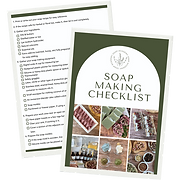
Download the free Soap Making Checklist – perfect to keep on your counter on soap day so you don’t forget anything when the lye comes out.
Join the Botanical Soap Making Beginners Course (£149) – a calm, step-by-step online course that takes you from “I’m nervous” to “I made this!” with videos, recipes and printable guides


Comments